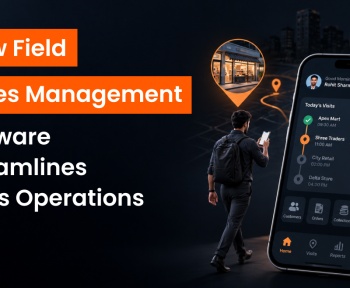
Your best salespeople spend most of their day outside the office, meeting dealers, visiting retailers and closing deals. That is where revenue is made. It is also where managers lose visibility. Which visits happened today? Which leads were followed up? Which territories are being ignored?
Many businesses still answer these questions with phone calls, spreadsheets and WhatsApp messages. This works for a team of three. It breaks down at fifteen. Field sales management software replaces that guesswork with a single system that shows what your team is doing, helps you plan better, and gives you the data to improve.
What Is Field Sales Management Software?
Field sales management software is a digital platform, usually with a mobile app for the team and a dashboard for managers, that helps businesses organise and monitor sales activity outside the office. It brings together visit planning, attendance, location tracking, order capture, lead management, expense claims and reporting in one place.
Instead of waiting for end-of-day updates, managers see activity as it happens. Instead of filling long reports, sales reps log visits and orders in a few taps.
Why Manual Field Sales Management Falls Short
Before looking at the benefits, it helps to see where traditional methods struggle:
- No real-time visibility. You only know what your team tells you, and often only at the end of the day.
- Inconsistent reporting. Every rep records information differently, so comparing performance is difficult.
- Poor route planning. Reps spend hours travelling between visits that could have been grouped efficiently.
- Missed follow-ups. Leads and customer requests get lost in notebooks, messages and memory.
- Slow expense and order processing. Paper claims and manual order entry delay approvals and create errors.
- Weak accountability. Without data, performance conversations rely on opinion rather than facts.
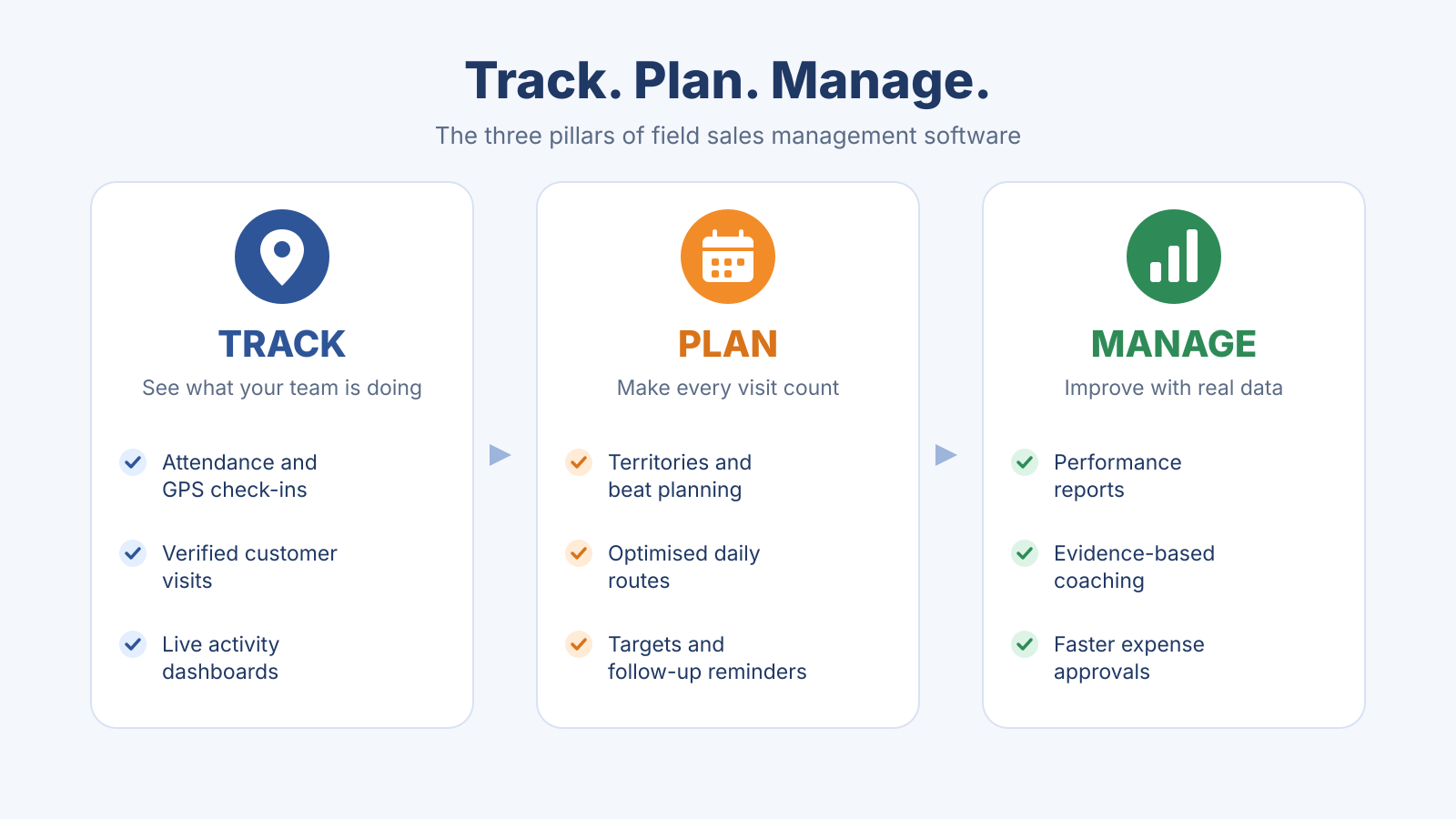
How to Track Your Field Sales Team
Tracking is not about watching people. It is about understanding how time is spent so you can support the team better.
- Attendance and check-ins. Reps mark attendance from the mobile app, and managers see who has started the day and from where.
- Live location and visit verification. Location-based check-ins confirm that a visit actually took place at the customer’s site, with time spent recorded automatically.
- Activity logging. Calls, meetings, demos, quotations and orders are captured in the app as they happen, creating a complete activity history for every customer.
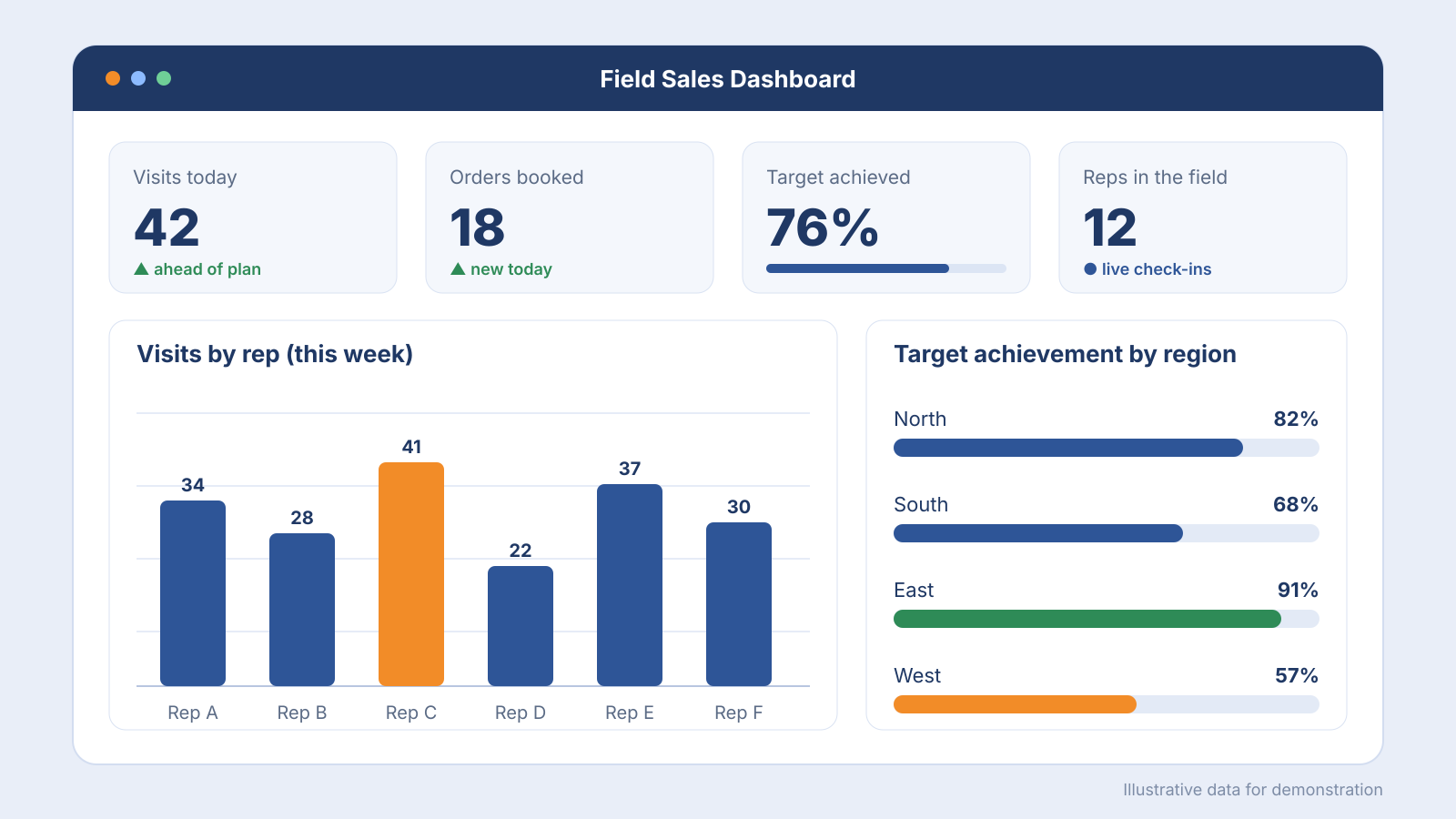
- Real-time dashboards. Managers get a live view of visits completed, orders booked, targets achieved and areas not yet covered.
A good system should respect privacy, for example by tracking only during working hours, and be transparent with the team about what is recorded and why.
How to Plan Your Field Sales Activity
Good planning is what turns a busy team into a productive one.
Territory management. Divide your market into clear territories so there is no overlap between reps and no area left uncovered.
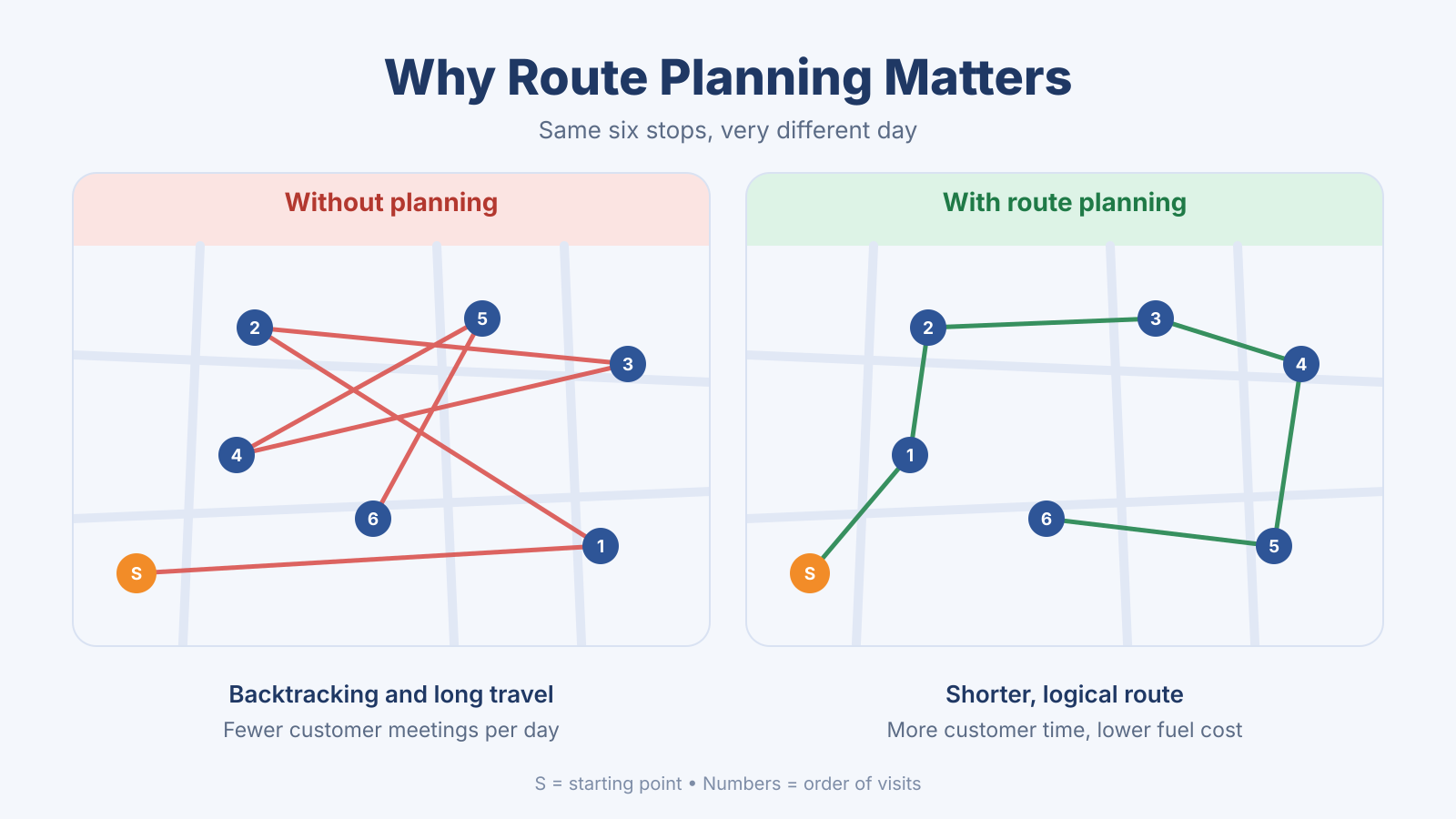
Beat and route planning. Plan daily and weekly visit schedules based on customer priority and location. Shorter travel routes mean more customer meetings per day and lower fuel costs.
Target setting. Set monthly or quarterly targets for each rep by product, region or customer segment, and compare them with actual performance at any time.
Task and follow-up reminders. Automated reminders make sure promised callbacks, quotations and payment follow-ups are not forgotten.
How to Manage and Improve Team Performance
Once tracking and planning are in place, management becomes data-driven.
- Performance reports. Compare reps on visits per day, conversion rate, average order value and target achievement.
- Coaching with evidence. Identify where individuals struggle, whether it is too few visits, low conversion or weak follow-up, and coach them with specifics.
- Fair recognition. Reward top performers using objective numbers, which builds trust and motivation.
- Faster decisions. Spot underperforming regions, slow-moving products or high-potential customers early, and act before the quarter ends.
- Simpler expenses and approvals. Reps submit travel and other claims from the app, and managers approve them quickly with supporting visit data.
Key Features to Look for in Field Sales Software
When evaluating options, check that the software offers:
- A simple mobile app that works with limited connectivity
- Attendance, GPS check-in and visit tracking
- Route and beat planning
- Lead, customer and order management
- Targets, incentives and performance dashboards
- Expense claim management
- Customisable reports and exports
- Integration with your CRM, ERP or accounting software
- Strong data security and role-based access
- Reliable support and training
Business Benefits at a Glance
| Area | Without software | With field sales software |
| Visibility | Depends on calls and reports | Real-time dashboards |
| Planning | Ad hoc, rep-dependent | Structured routes and territories |
| Reporting | Manual and inconsistent | Automatic and standardised |
| Follow-ups | Easily missed | Reminders and activity history |
| Accountability | Based on opinion | Based on data |
| Productivity | Time lost in travel and paperwork | More customer-facing time |
Tips for a Successful Rollout
- Involve the sales team early. Explain how the tool saves their time, not only how it helps management.
- Start simple. Begin with attendance, visits and orders, then add advanced features.
- Train properly. A short hands-on session at the start prevents resistance later.
- Review the data regularly. The software is only as useful as the decisions made from it.
Frequently Asked Questions
What types of businesses benefit from field sales management software?
Any business with a team that sells or services customers outside the office, such as FMCG, pharma, manufacturing, distribution, building materials, insurance and financial services.
Is it difficult for sales reps to learn?
Most modern apps are designed to be simple. With a short training session, reps typically adapt within a few days.
Does it work in areas with poor internet connectivity?
Many solutions let reps capture data offline and sync automatically once the connection returns. Confirm this when evaluating a product.
Can it integrate with our existing CRM or ERP?
Good platforms offer integrations or APIs so data flows between systems without duplicate entry.
How soon can we see results?
Visibility improves almost immediately. Gains in productivity and conversion usually follow within a few months as planning and coaching improve.
Conclusion
Managing a field sales team without proper tools means making decisions in the dark. Field sales management software gives you clear visibility into daily activity, better planning of routes and territories, and the data to coach and reward your team fairly. The result is a more productive team, happier customers and more predictable revenue.
At Adit Microsys, we help businesses replace manual follow-ups and scattered reports with software built around how their teams actually work. Whether you manage a handful of reps or a large field network, our team can help you choose, customise and roll out a solution that fits your sales process.
Ready to bring structure and visibility to your sales team? Contact Adit Microsys today for a free demo and see how we can help your business track, plan and grow.