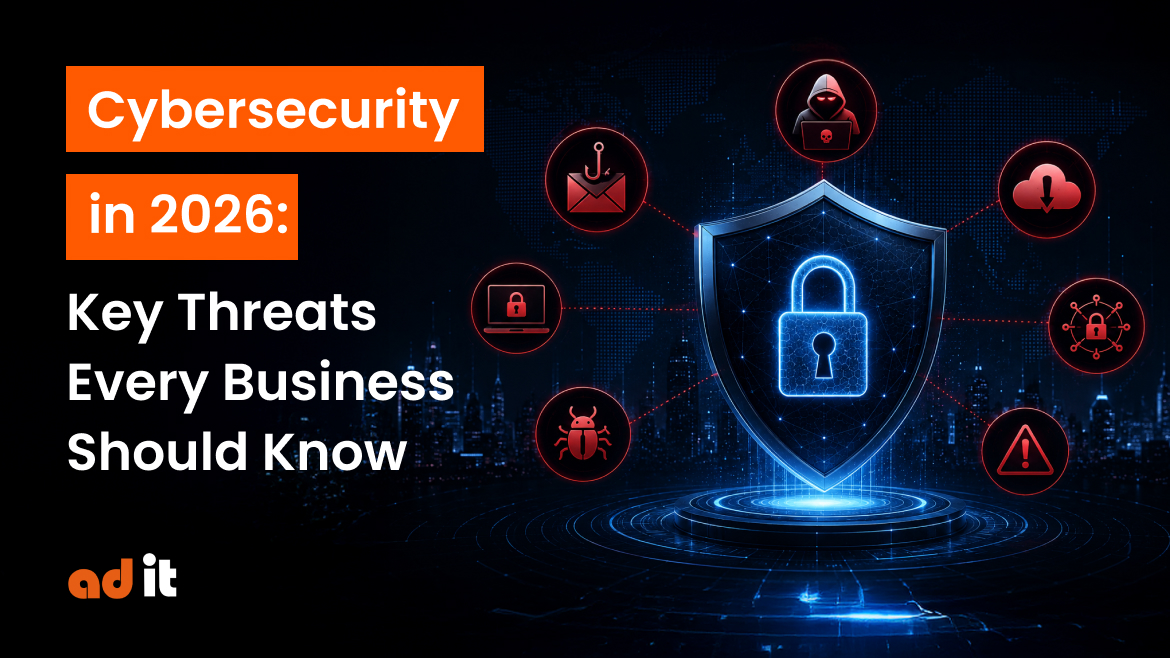
Cybersecurity is no longer just an IT concern; It is a business priority. As organizations continue to adopt cloud platforms, remote work models, AI-powered tools, and connected devices, cyber threats are becoming more sophisticated and harder to detect.
In 2026, businesses of all sizes face growing risks that can impact operations, customer trust, and business continuity. Understanding these threats is the first step toward building a stronger security posture.
-
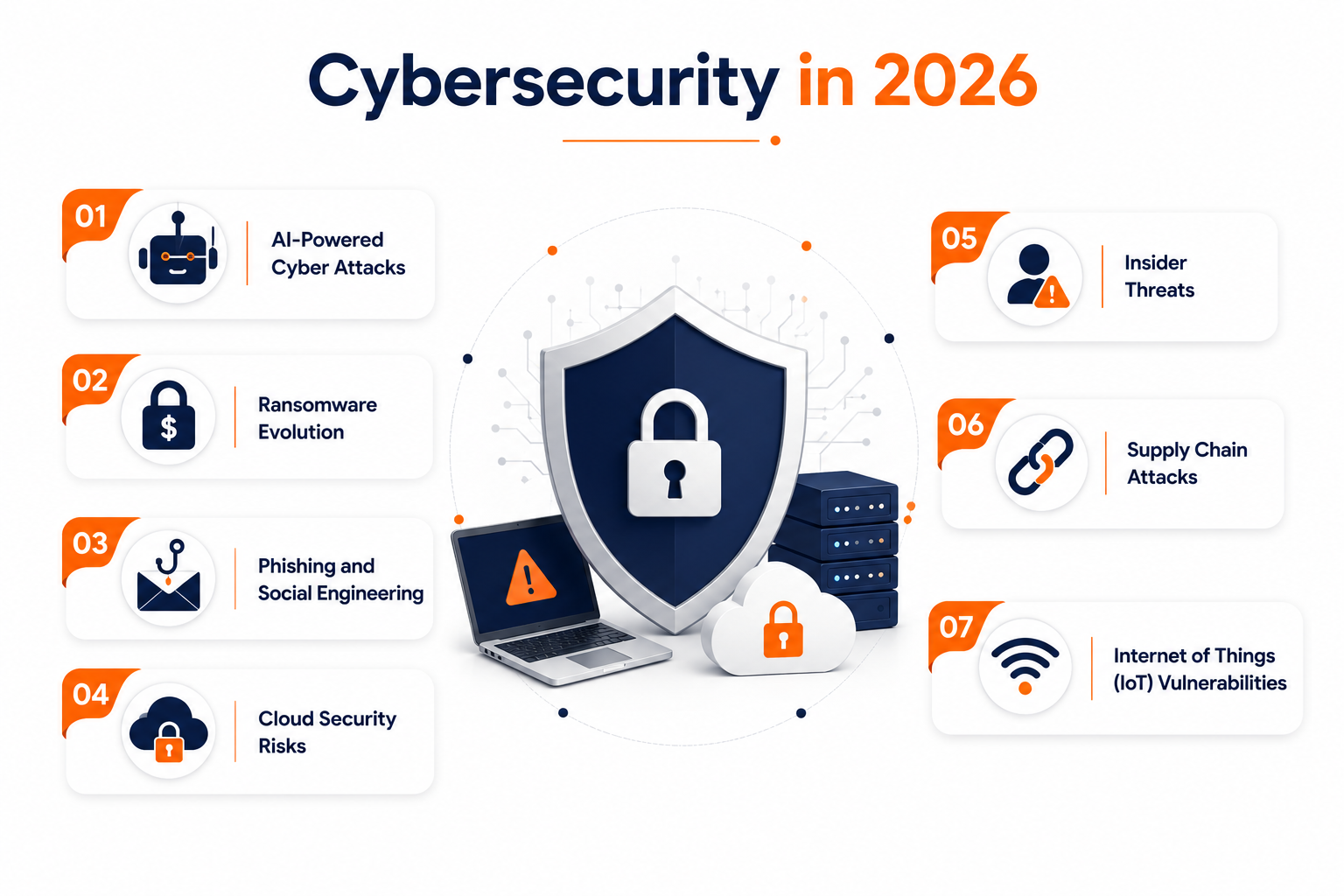
AI-Powered Cyber Attacks
Cybercriminals are increasingly using artificial intelligence to automate attacks, create convincing phishing emails, and identify vulnerabilities faster than ever before. These attacks can be highly targeted, making them more difficult for employees and traditional security systems to detect.
-
Ransomware Evolution
Ransomware remains one of the most damaging cyber threats. Attackers are now targeting not only data but also critical business operations. Organizations without strong backup, recovery, and security strategies may face significant downtime and financial losses.
-
Phishing and Social Engineering
Email phishing continues to be a major entry point for cyberattacks. Advanced phishing campaigns now use personalized messages, fake websites, and even AI-generated content to trick employees into sharing sensitive information.
-
Cloud Security Risks
As businesses rely more on cloud services, misconfigured cloud environments and weak access controls can expose critical data. Regular security audits and proper cloud governance are essential for protecting business assets.
Not all threats come from outside the organization. Accidental mistakes, compromised accounts, or malicious insiders can lead to data breaches and operational disruptions. Strong access management and employee awareness programs can help reduce these risks.
-
Supply Chain Attacks
Businesses often depend on multiple vendors and technology partners. Cybercriminals may target these third parties to gain access to larger networks, making supply chain security a critical area of focus.
-
Internet of Things (IoT) Vulnerabilities
Connected devices improve efficiency but can also create security gaps if not properly managed. Every connected device should be monitored, updated, and secured as part of an organization’s cybersecurity strategy.
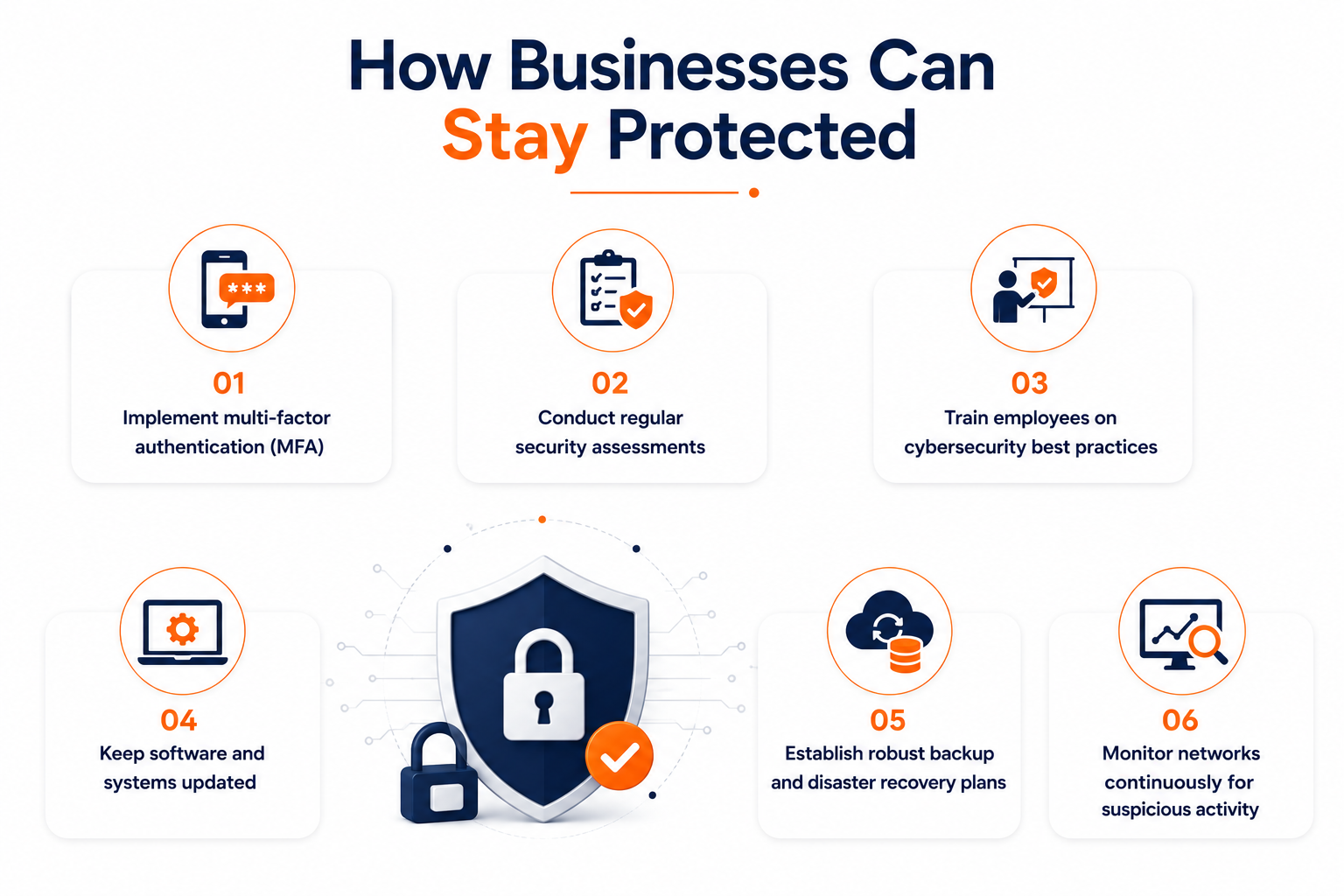
How Businesses Can Stay Protected
To address emerging cyber threats, organizations should:
- Implement multi-factor authentication (MFA)
- Conduct regular security assessments
- Train employees on cybersecurity best practices
- Keep software and systems updated
- Establish robust backup and disaster recovery plans
- Monitor networks continuously for suspicious activity
The Road Ahead
The cybersecurity landscape will continue to evolve throughout 2026. Businesses that take a proactive approach to security will be better positioned to protect their data, maintain customer trust, and ensure operational resilience.
At Adit Microsys, we help organizations strengthen their IT infrastructure, improve security practices, and build resilient technology environments that support long-term business growth.
Ready to strengthen your cybersecurity strategy for 2026? Contact Adit Microsys today to learn how we can help protect your business from evolving cyber threats.