In today’s fast-paced digital world, users expect websites to load almost instantly. Whether they are browsing products, reading a blog, or looking for a service, people have little patience for slow-loading websites. In fact, even a delay of a few seconds can cause visitors to leave your site and move to a competitor. This is why website speed optimization has become one of the most important factors for online success.
Website speed affects more than just user satisfaction. It directly influences SEO rankings, website traffic, conversion rates, and overall business growth. Search engines like Google prioritize websites that provide a fast and seamless user experience. Businesses that invest in improving website performance are more likely to rank higher in search results, attract more visitors, and generate better returns from their online presence.
At Adit Microsys, we help businesses build high-performing websites that not only look great but also deliver exceptional speed, usability, and search engine performance.
What Is Website Speed?
Website speed refers to the amount of time it takes for a web page to load and become fully interactive for users. It includes factors such as server response time, image loading, page rendering, code execution, and overall website performance.
A fast website allows users to access information quickly and complete actions without delays. On the other hand, a slow website can create frustration and increase the likelihood of users leaving before engaging with the content.
Google evaluates website performance using metrics known as Core Web Vitals, which measure loading speed, interactivity, and visual stability. These metrics have become an important part of Google’s ranking algorithm, making website speed a crucial aspect of modern SEO.
Why Website Speed Matters for SEO
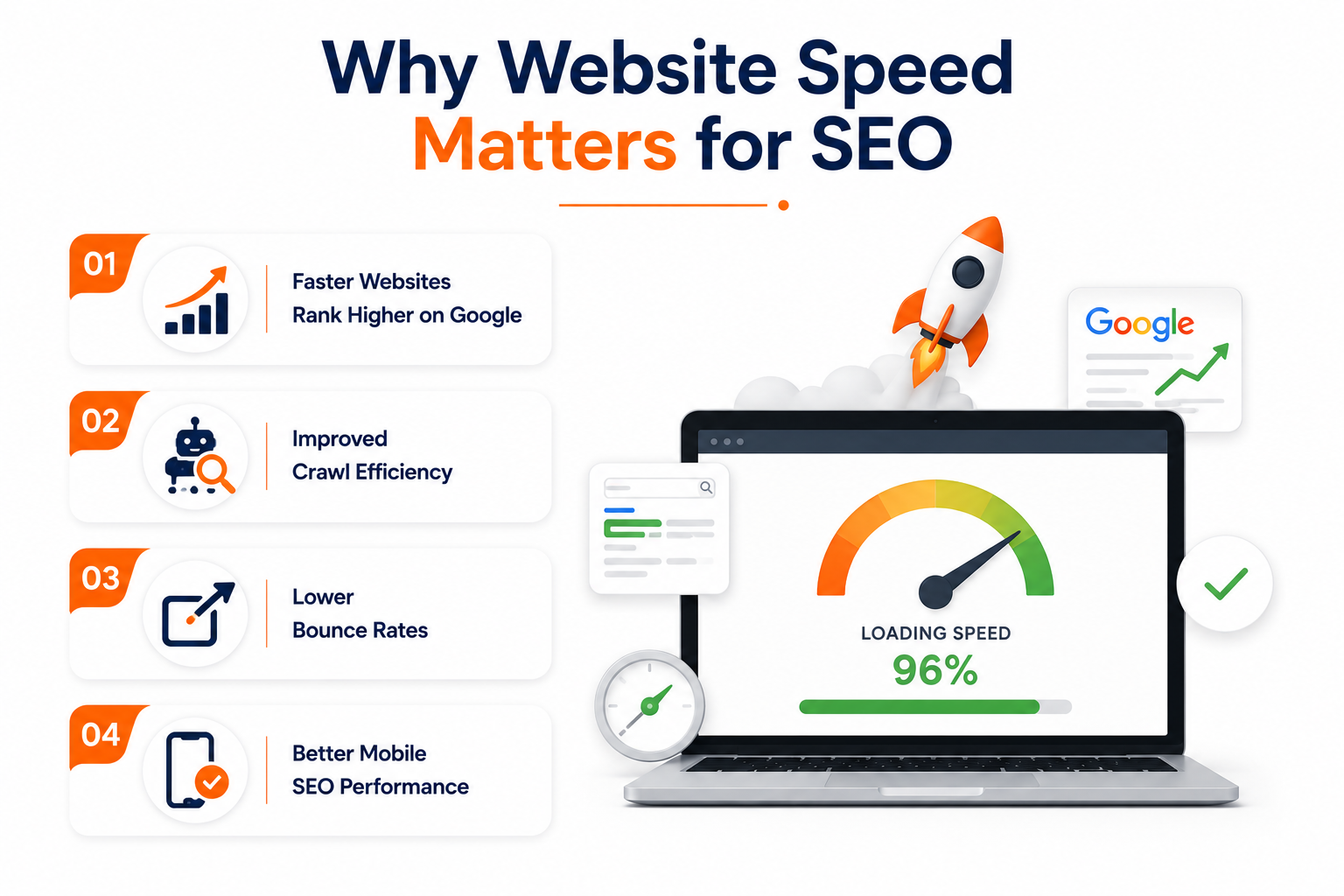
- Faster Websites Rank Higher on Google
Google’s primary goal is to provide users with the best possible search experience. Since website speed directly impacts user satisfaction, Google considers page speed as a ranking factor.
When your website loads quickly, search engines can crawl and index pages more efficiently. This improves your chances of appearing higher in search engine results pages (SERPs). Businesses investing in technical SEO and website speed optimization often experience improved rankings and increased organic traffic.
- Improved Crawl Efficiency
Search engine bots have limited resources when crawling websites. Faster websites allow search engines to crawl more pages within a given timeframe, improving indexation and visibility.
For large websites with hundreds or thousands of pages, website speed can significantly impact how effectively search engines discover and rank content.
- Lower Bounce Rates
Bounce rate refers to the percentage of visitors who leave a website without interacting with it. Studies consistently show that users are more likely to abandon websites that take too long to load.
A high bounce rate sends negative engagement signals to search engines, which may affect rankings over time. By improving page load speed, businesses can keep users engaged and encourage them to explore additional pages.
- Better Mobile SEO Performance
With Google’s mobile-first indexing approach, the mobile version of a website is now the primary version used for ranking and indexing.
Mobile users often browse on slower networks and smaller devices. A website that loads quickly on mobile devices provides a better experience and performs better in mobile search results.
How Website Speed Impacts User Experience
- Faster Access to Information
Today’s users expect immediate access to information. Whether someone is searching for a product, service, or answer to a question, they want results quickly.
A fast-loading website helps users find what they need without waiting, leading to higher satisfaction and engagement.
- Increased User Engagement
Website speed influences how users interact with your content. Visitors are more likely to read articles, browse products, watch videos, and complete forms when pages load quickly.
When users enjoy a smooth browsing experience, they tend to spend more time on the website, increasing overall engagement metrics.
- Higher Conversion Rates
One of the most significant benefits of a fast website is improved conversion performance.
Whether your goal is:
- Generating leads
- Selling products online
- Scheduling appointments
- Encouraging newsletter signups
Website speed plays a major role in influencing user actions.
Even small improvements in page load time can lead to increased conversion rates and revenue. Faster websites reduce friction in the customer journey and make it easier for visitors to complete desired actions.
- Builds Trust and Professionalism
A slow website can create a negative impression of your business. Visitors may perceive a slow-loading website as outdated, unreliable, or poorly maintained.
On the other hand, a fast and responsive website demonstrates professionalism and credibility. It reassures visitors that your business values their time and experience.
Common Reasons Websites Become Slow
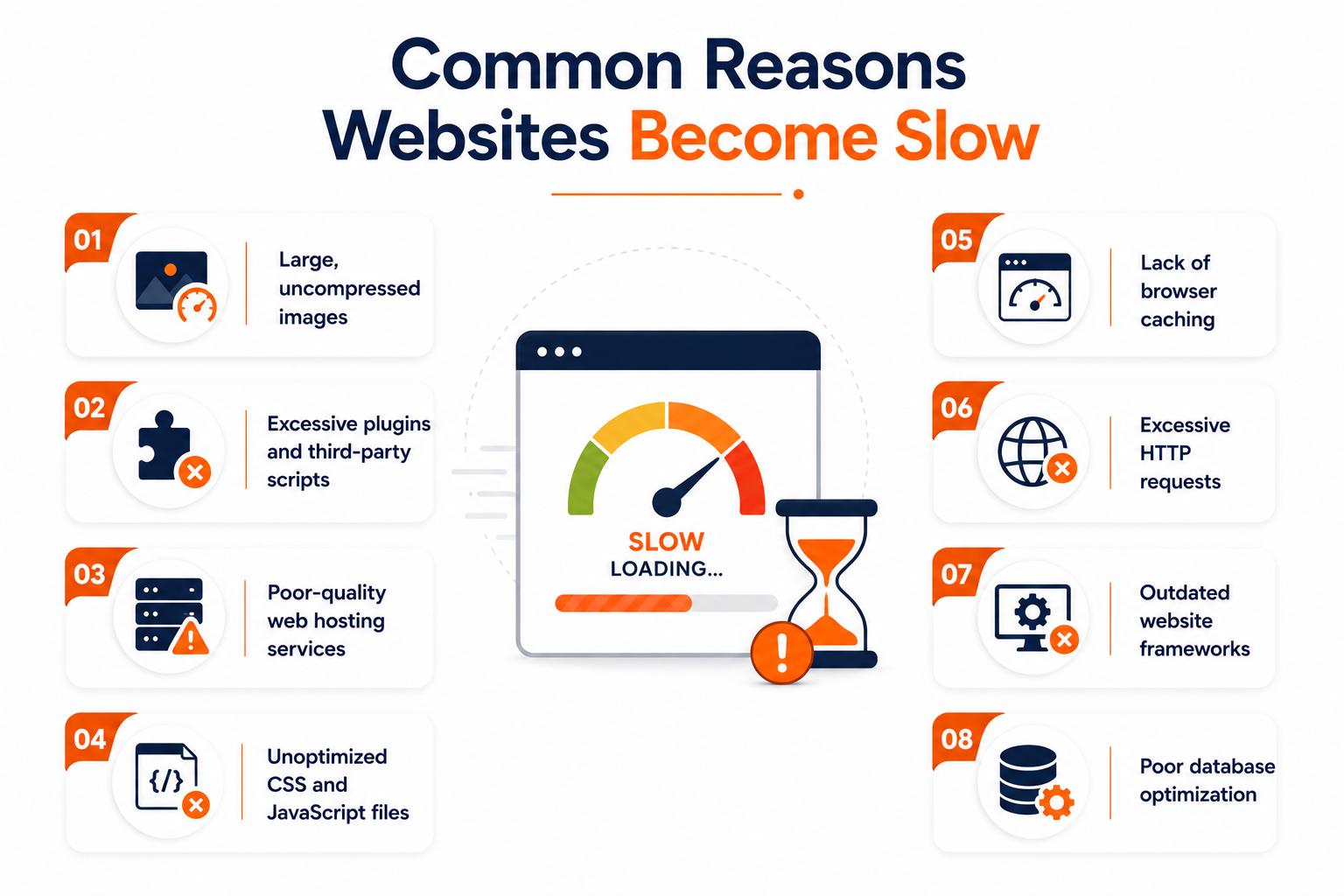
Many businesses unknowingly face performance issues due to poor optimization practices. Common causes include:
- Large, uncompressed images
- Excessive plugins and third-party scripts
- Poor-quality web hosting services
- Unoptimized CSS and JavaScript files
- Lack of browser caching
- Excessive HTTP requests
- Outdated website frameworks
- Poor database optimization
Identifying these bottlenecks is the first step toward improving website performance.
Practical Tips to Improve Website Speed
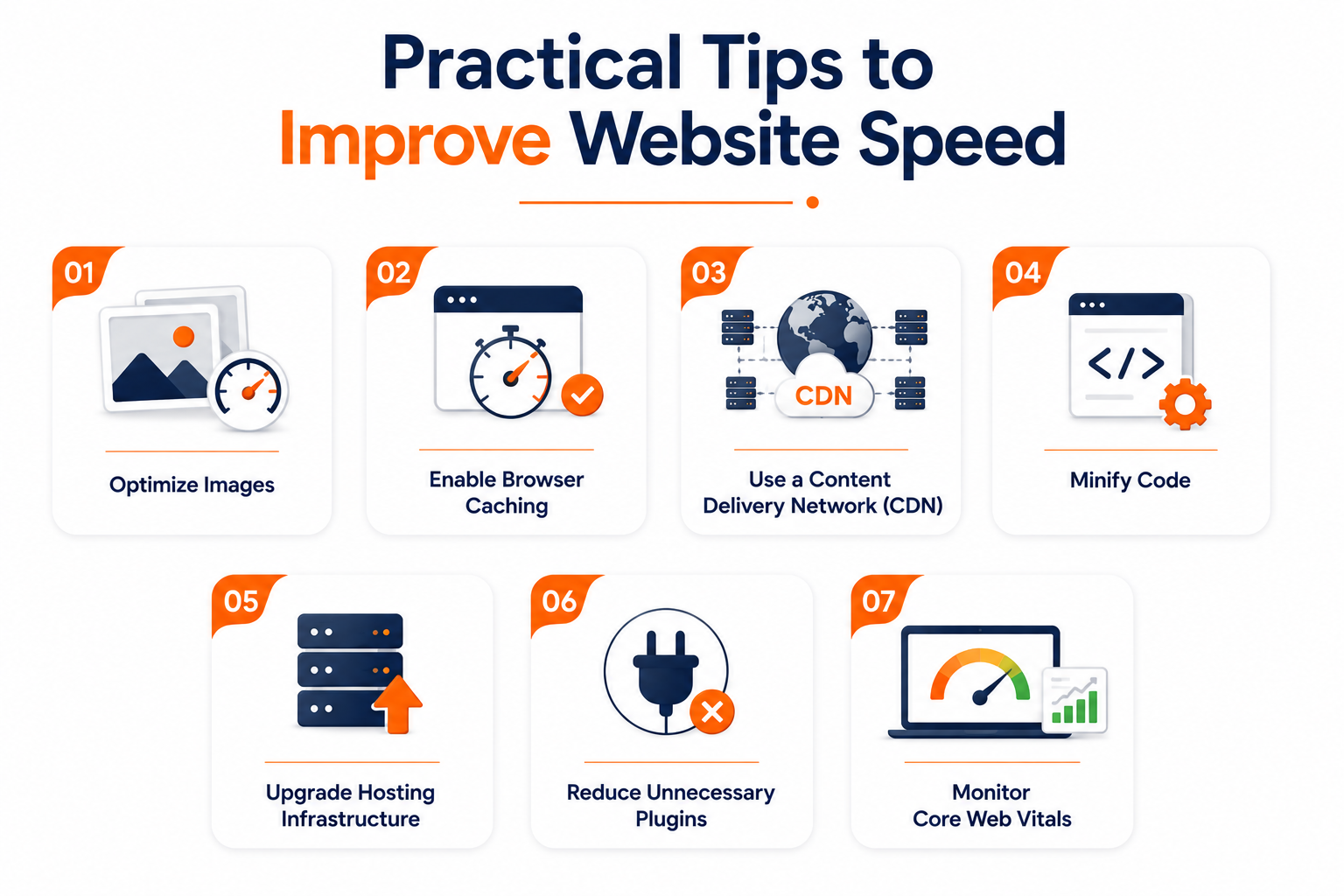
Businesses can take several steps to improve page load times and overall website performance:
- Optimize Images
Compress and resize images without compromising quality. Large image files are one of the most common causes of slow websites.
- Enable Browser Caching
Caching allows frequently accessed resources to be stored locally, reducing load times for returning visitors.
- Use a Content Delivery Network (CDN)
A CDN distributes website content across multiple servers worldwide, helping users access pages from the nearest location.
- Minify Code
Reducing unnecessary CSS, JavaScript, and HTML code can improve loading speed and overall efficiency.
- Upgrade Hosting Infrastructure
Reliable hosting providers offer better server performance, uptime, and faster response times.
- Reduce Unnecessary Plugins
Too many plugins can slow down website performance. Regularly review and remove unused extensions.
- Monitor Core Web Vitals
Use tools such as Google Page Speed Insights and Google Search Console to track and improve website performance metrics.
How Adit Microsys Can Help
At Adit Microsys, we understand that website speed is a critical component of digital success. Our team provides comprehensive solutions including website development, technical SEO, website optimization, performance audits, and digital transformation services designed to improve website speed and user experience.
We help businesses identify performance bottlenecks, optimize website architecture, improve Core Web Vitals, and implement best practices that enhance both search engine rankings and customer engagement.
Conclucion
Website speed is no longer just a technical consideration, It is a key factor influencing SEO rankings, user experience, website traffic, and business growth. Fast-loading websites provide better user experiences, reduce bounce rates, increase conversions, and improve search engine visibility.
As online competition continues to grow, businesses cannot afford to ignore website performance. Investing in website speed optimization today can deliver long-term benefits for search rankings, customer satisfaction, and revenue generation.
If you’re looking to improve website speed, enhance SEO performance, and create a better experience for your visitors, Adit Microsys can help you build a faster, more efficient, and future-ready website.